Mental health
Mental health is represented through the 12-item General Health Questionnaire, with baseline measures of psychological distress subsequently adjusted for economic transitions and non-economic exposure to the Covid-19 pandemic.
Baseline psychological distress
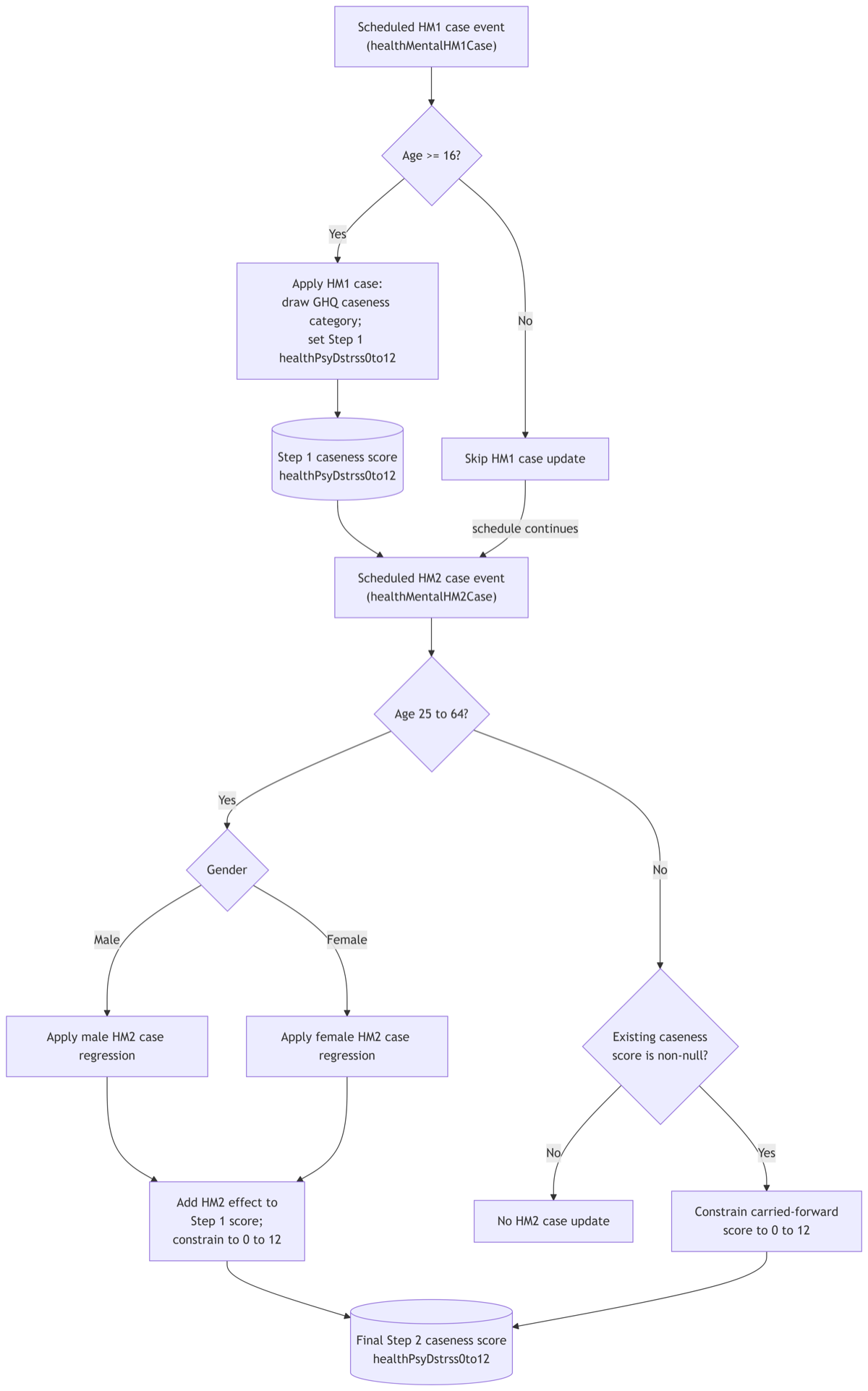
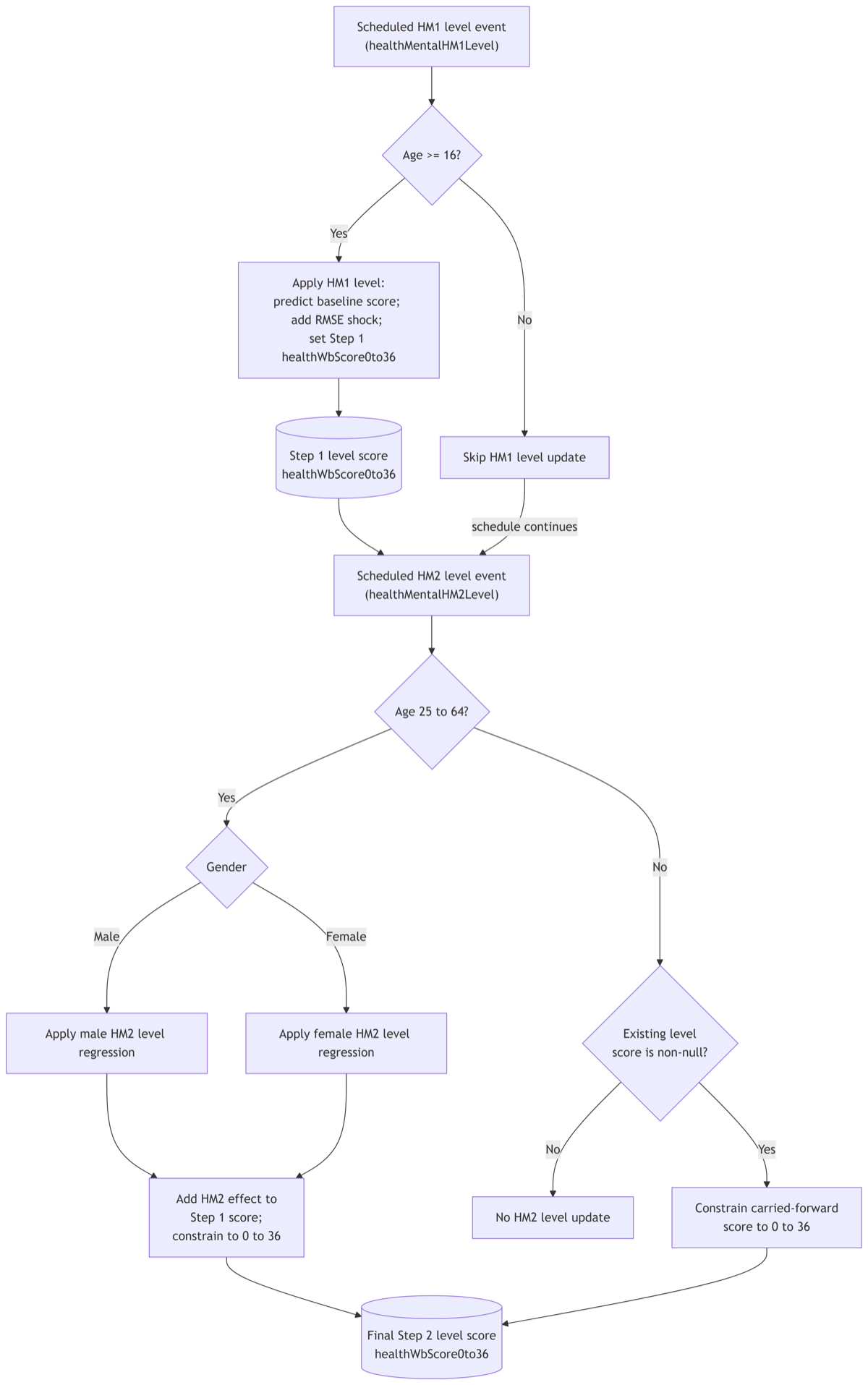
For people aged 16 and over, each simulation cycle produces two GHQ-12 measures. A Likert score from 0 to 36 is estimated with a linear regression. A binary indicator of potentially clinically significant common mental disorder is estimated with a logistic regression.
Both specifications condition on the lagged number of dependent children, lagged physical and mental health, gender, age, education, household composition, region and year.
Economic transitions and the Covid-19 period
The baseline level and caseness measures are adjusted for changes in economic circumstances and for non-economic exposure to the Covid-19 pandemic.
Fixed-effects regressions estimate the direct effects of transitions from employment to non-employment, non-employment to employment, and non-employment to long-term non-employment. They also estimate transitions into and out of poverty, long-term poverty, changes in household-income growth and decreases in household income.
Effects of economic transitions are estimated on pre-pandemic data so that they remain applicable in other periods. Non-economic pandemic effects for 2020 and 2021 are estimated with a multilevel mixed-effects generalised linear model.
Process diagrams
The first diagram separates the baseline level process from the secondary adjustment implemented by Person.healthMentalHM2level(). The second shows how the baseline and secondary caseness processes are combined.
View the psychological-distress level diagram
View the psychological-distress caseness diagram